How Property Inflation Impacts Rental Prices in Kenya

Discover how surging property inflation directly drives up rental prices in Kenya. Read our latest market updates and expert rental insights.
Juma stood on his balcony in Kilimani, holding a fresh cup of coffee. The morning sun lit up Nairobi's skyline, but his mind was far away. He just received a sharp notice from his landlord. His monthly rent was increasing by fifteen percent.
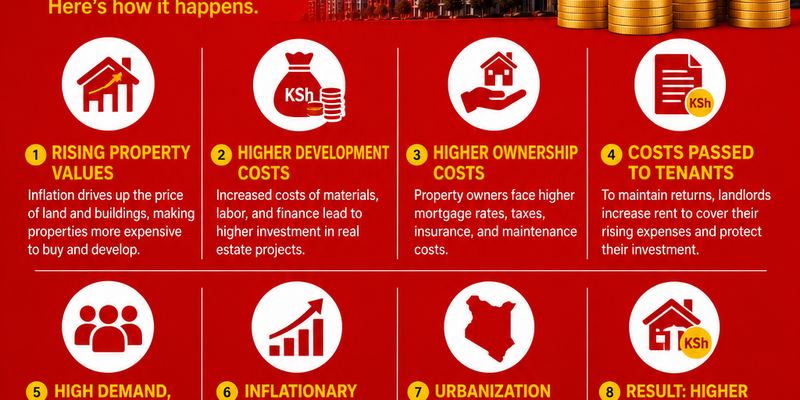
Like many tenants, Juma felt trapped by the rising cost of local housing. His story is common across major Kenyan urban centers today. Rising development costs force landlords to protect their profit margins. This specific economic pressure directly drives the steady surge of rental prices inflation in Kenya. According to recent data from Expression Africa Property Reports, tighter financial conditions continue to reshape the local housing market.
Understanding this relationship helps tenants and investors navigate the market safely. Let us break down how property inflation changes the local housing market.
The Rising Cost of Building Materials
Building a rental property Kenya requires a massive capital investment up front. Over the last year, global supply chains faced severe disruptions. The local currency fluctuated, making imported finishes much more expensive. The price of cement, steel, and fuel rose significantly. Developers pay more to finish their projects on time. Landlords then pass these high development costs directly to consumers. Consequently, your monthly housing expenses increase to cover these expenses. You can monitor the historical data of these price adjustments via the HassConsult Property Index to see how inflation acts as a primary market driver.
Land Values and Increased Financing Costs
Land inside Nairobi, Mombasa, and Kisumu remains incredibly scarce. Competition for prime plots keeps driving land prices up each quarter. Furthermore, high central bank interest rates make commercial construction loans expensive.
Landlords must service these heavy mortgages every single month. When their financing costs spike, keeping rent flat is impossible. This reality forms the core of our current rental insight for the year. For an extensive overview of demand shifts, check out the Kenya Property Centre Demand Trends report.
Urbanization adds more pressure as thousands relocate to cities daily. High demand paired with expensive supply causes rental prices inflation in Kenya to accelerate rapidly. For a detailed picture of the national macro trends, review the full Afriqahome Kenya Real Estate Guide.
Strategic Tips for Smart Tenants and Property Investors
Navigating a highly inflationary housing market requires deliberate preparation. Here are practical ways to protect your hard-earned finances today.
For Tenants Seeking Affordability
- Negotiate Long-Term Leases: Lock in fixed rates for two years to avoid unpredictable annual increments.
- Explore Emerging Satellite Towns: Look at growing areas like Syokimau, Juja, or Kitengela for better value.
- Track Market Trends: Read local quarterly property indices to know the actual average rates.
For Property Owners and Developers
- Prioritize Energy Efficiency: Use solar power and rainwater harvesting to lower running utilities.
- Optimize Unit Spaces: Build highly functional studio apartments that match modern urban budgets.
To better align your budget with ongoing real estate shifts, refer to the Wandering Investor Nairobi Guide for pricing dynamics and statutory fee updates.
Frequently Asked Questions
Why is rent rising faster than average local salaries?
Property construction relies heavily on imported goods and raw materials. When inflation hits those sectors, housing costs climb regardless of average wage growth.
Can a landlord increase rent at any time in Kenya?
No, the law protects tenants from random increments. Landlords must give a formal written notice, usually a few months in advance.
Is it wiser to buy or rent a home during inflation?
Buying a rental property Kenya secures a permanent physical asset. It serves as an excellent shield against long-term inflation if you can secure affordable financing. Review architectural options and legal tips from Kings Developers Industry Insights to see if purchasing makes financial sense for you right now.
Partner with the Real Estate Experts
Do not let unpredictable housing shifts catch you off guard. Secure your financial future by making informed property decisions today.
Get expert guidance on finding affordable, high-yield assets that survive inflation.
Call us today: +254 116 071 190
Visit our website: Imperia Group Online
For a deeper visual breakdown of current market conditions, check out this comprehensive video analysis on Why Kenya's Real Estate Is Slowing Down, which details the exactly 27% drop in construction approvals alongside changing rental yield data across major suburbs.